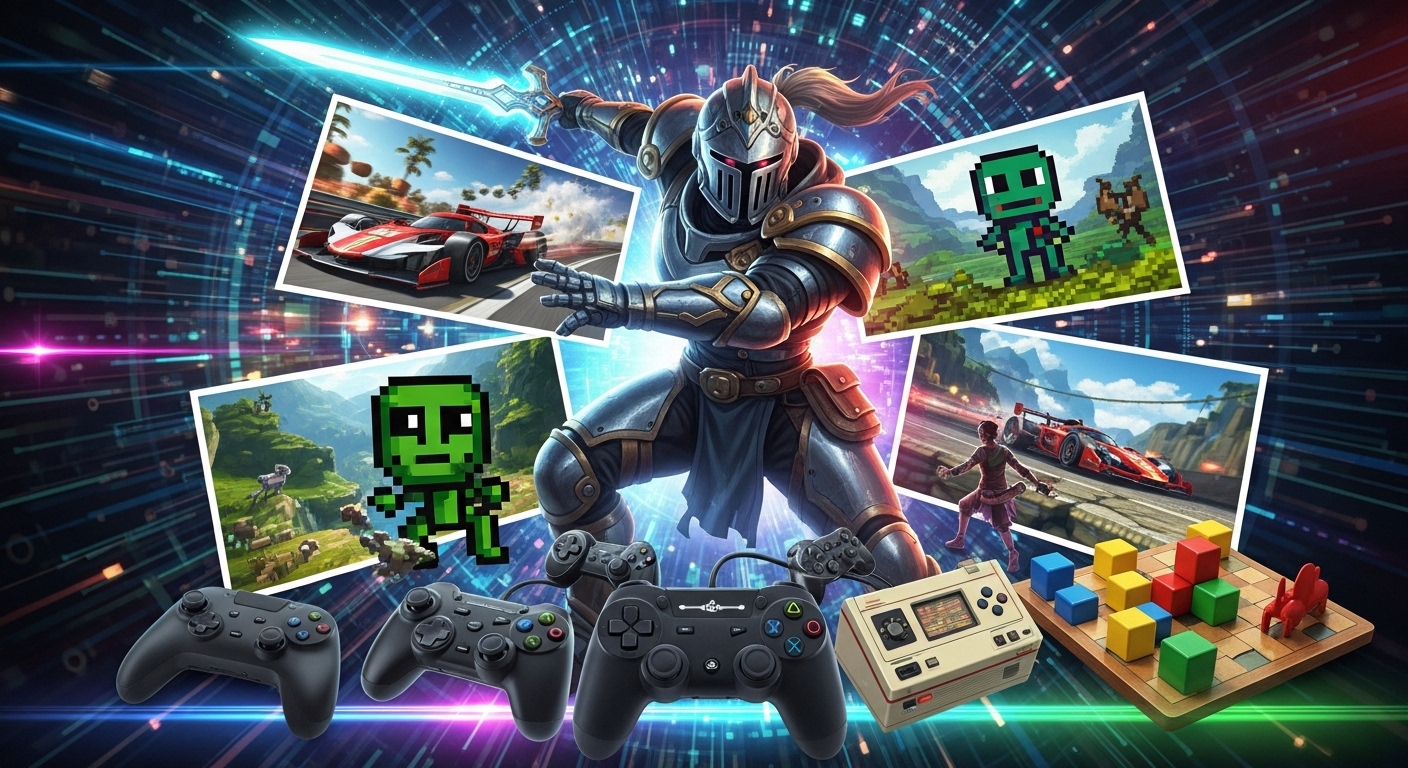

Games have been an integral part of human culture for thousands of years. From ancient board games played on carved stones to the hyper-realistic video games of today, humans have always sought entertainment, challenge, and social connection through play. Games are more than just a way to pass time; they are a reflection of human creativity, psychology, and technology. In this blog post, we will explore the evolution of games, the types that exist today, their cultural significance, and the psychological benefits they offer.
The Evolution of Games
The history of games is a fascinating journey that mirrors human civilization itself. Early humans invented games as simple activities to entertain, educate, or prepare for real-life challenges. One of the earliest known board games is Senet, played in ancient Egypt over 5,000 years ago. These early games often had religious or spiritual significance, offering insight into how ancient cultures viewed the world and their place in it.
As societies evolved, so did the complexity of games. Chess, which originated in India around the 6th century, is an excellent example of a strategic game that transcended its initial purpose and became a symbol of intelligence and skill. In contrast, simple games like tag, hide-and-seek, or hopscotch have remained timeless, continuing to captivate children across generations.
The 20th century brought revolutionary changes with the invention of electronic games. Arcade games emerged in the 1970s, creating a new form of entertainment that combined technology, storytelling, and skill-based challenges. The introduction of home gaming consoles in the 1980s, like the Nintendo Entertainment System, made gaming more accessible than ever before. Today, video games have become an industry worth billions, offering immersive experiences through advanced graphics, complex narratives, and interactive gameplay.
Types of Games
Games can be broadly categorized based on how they are played, the skills they require, and the goals they pursue. Understanding these categories can help us appreciate the diversity and richness of the gaming world.
Board Games
Board games are among the oldest forms of structured play. They often require strategic thinking, planning, and sometimes luck. Classic examples include Monopoly, Risk, and Scrabble. Board games have seen a resurgence in recent years, thanks to modern tabletop games like Catan and Ticket to Ride, which combine social interaction with tactical decision-making. These games encourage critical thinking, negotiation skills, and cooperation, making them popular among both children and adults.
Card Games
Card games have a long-standing cultural significance around the world. From traditional games like Poker, Bridge, and Solitaire to modern collectible card games like Magic: The Gathering, these games test memory, strategy, and probability skills. Card games are not only entertaining but also often serve as a social ritual, bringing people together in competitive or cooperative settings.
Sports and Physical Games
Physical games and sports are unique in that they combine mental and physical challenges. Games like football, basketball, cricket, and tennis require strategy, endurance, and teamwork. Beyond professional competition, recreational sports provide a way for people of all ages to stay active, relieve stress, and connect with others. Physical games also have cultural significance, reflecting the values and traditions of communities around the world.
Video Games
Video games are the most technologically advanced form of gaming. They span genres as diverse as first-person shooters, role-playing games, simulations, and puzzles. Video games can tell elaborate stories, create immersive worlds, and offer interactive experiences that other forms of games cannot. Multiplayer online games, such as Fortnite or World of Warcraft, have created global communities where players collaborate and compete across continents. Video games also challenge cognitive skills, including problem-solving, hand-eye coordination, and strategic thinking.
Puzzle and Brain Games
Puzzle games, whether in the form of crossword puzzles, Sudoku, or mobile app challenges, are designed to stimulate the mind. They improve memory, focus, and analytical thinking. Brain games have become especially popular with adults, as people look for ways to keep their minds sharp while enjoying leisure activities. These games demonstrate that entertainment can also be educational and mentally rewarding.
Cultural Significance of Games
Games are deeply intertwined with culture, reflecting the values, beliefs, and social structures of the communities that play them. In many societies, games are not merely pastimes but also tools for teaching lessons, reinforcing traditions, and building social cohesion.
For example, in many Indigenous cultures, games are used to teach children essential life skills such as teamwork, resourcefulness, and survival techniques. Similarly, in ancient Greece, competitive games were a cornerstone of society, with events like the Olympic Games serving as both entertainment and a way to honor the gods. In modern times, global sporting events and eSports competitions continue this tradition, drawing audiences that span countries, languages, and cultures.
Games also serve as a bridge between generations. Classic board games or traditional sports are often passed down from parents to children, creating shared experiences that strengthen family and community bonds. In digital spaces, online games connect players from different backgrounds, fostering cross-cultural understanding and friendships.
The Psychology Behind Gaming
Why do humans enjoy games so much? The answer lies in the psychology of play. Games provide a sense of challenge, accomplishment, and reward, which trigger positive emotions in the brain. When people play games, they often experience what psychologists call “flow,” a state of deep focus and enjoyment where time seems to pass unnoticed.
Games also satisfy fundamental human needs. They allow players to explore identities, take risks in safe environments, and engage in social interactions. Cooperative games foster teamwork and empathy, while competitive games develop resilience and strategic thinking. Even games that rely on luck or chance can teach players how to cope with unpredictability and adapt to changing situations.
In recent years, research has highlighted the cognitive benefits of gaming. Certain types of games improve memory, problem-solving skills, and spatial reasoning. Others enhance decision-making under pressure and improve multitasking abilities. Far from being mere entertainment, games are tools that can strengthen the mind and body in various ways.
Games as a Form of Storytelling
Games have evolved beyond simple rules and objectives; many are now sophisticated platforms for storytelling. Narrative-driven games like The Last of Us, Red Dead Redemption, and The Witcher series offer intricate plots, well-developed characters, and moral dilemmas. Players are not passive observers but active participants in the story, making choices that affect outcomes and creating personalized experiences.
This interactive storytelling distinguishes games from traditional forms of media such as books or movies. The player’s agency allows for multiple narrative pathways, making each experience unique. Games as storytelling mediums also tackle complex themes such as morality, identity, and human relationships, demonstrating that they are capable of delivering deep emotional and intellectual engagement.
The Future of Gaming
The gaming industry is continuously evolving, and its future holds exciting possibilities. Advances in virtual reality and augmented reality promise fully immersive experiences where players can interact with digital worlds in unprecedented ways. Artificial intelligence is making games smarter and more adaptive, offering personalized challenges and dynamic storylines. Cloud gaming and mobile platforms are making games more accessible, allowing players to connect and compete from anywhere in the world.
Beyond technology, the social impact of games is expanding. Educational games are being used to teach complex subjects, from mathematics to history. Therapeutic games are helping individuals cope with stress, anxiety, and cognitive decline. Esports are becoming mainstream, with professional players earning recognition and respect similar to traditional athletes. The cultural, social, and psychological significance of games is set to grow alongside technological innovation.
Conclusion
Games are more than mere entertainment; they are a fundamental part of human culture, creativity, and development. From ancient board games to modern video games, they reflect our desire for challenge, storytelling, and social connection. Whether through physical sports, strategic card games, immersive digital worlds, or brain-teasing puzzles, games engage the mind, body, and emotions in ways that few other activities can.
As we look to the future, games will continue to evolve, pushing the boundaries of technology, narrative, and human interaction. They will remain a vital part of our lives, not only as a source of fun but as a tool for learning, personal growth, and cultural connection. The world of games is vast, diverse, and endlessly fascinating—inviting everyone to play, explore, and discover the joy that comes from the simple yet profound act of gaming.