Introduction
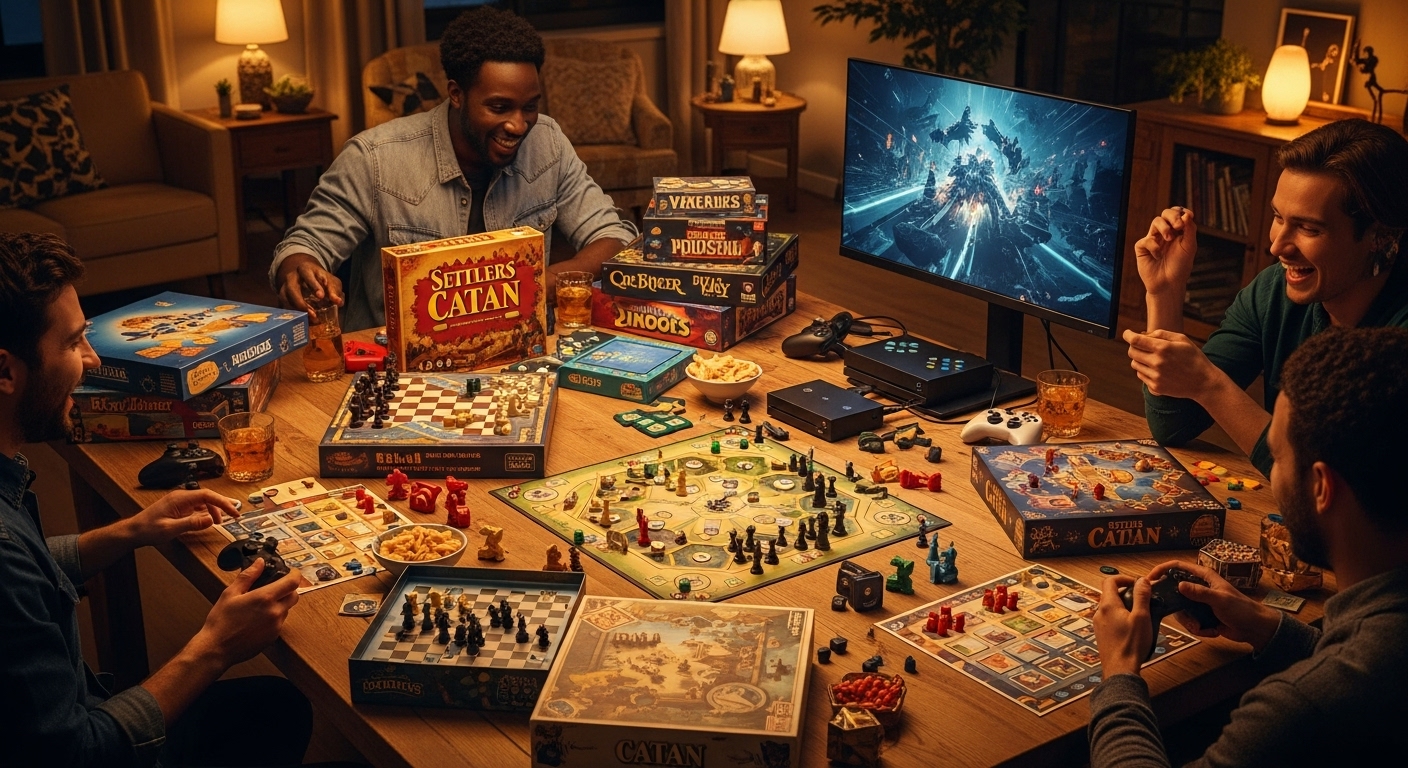
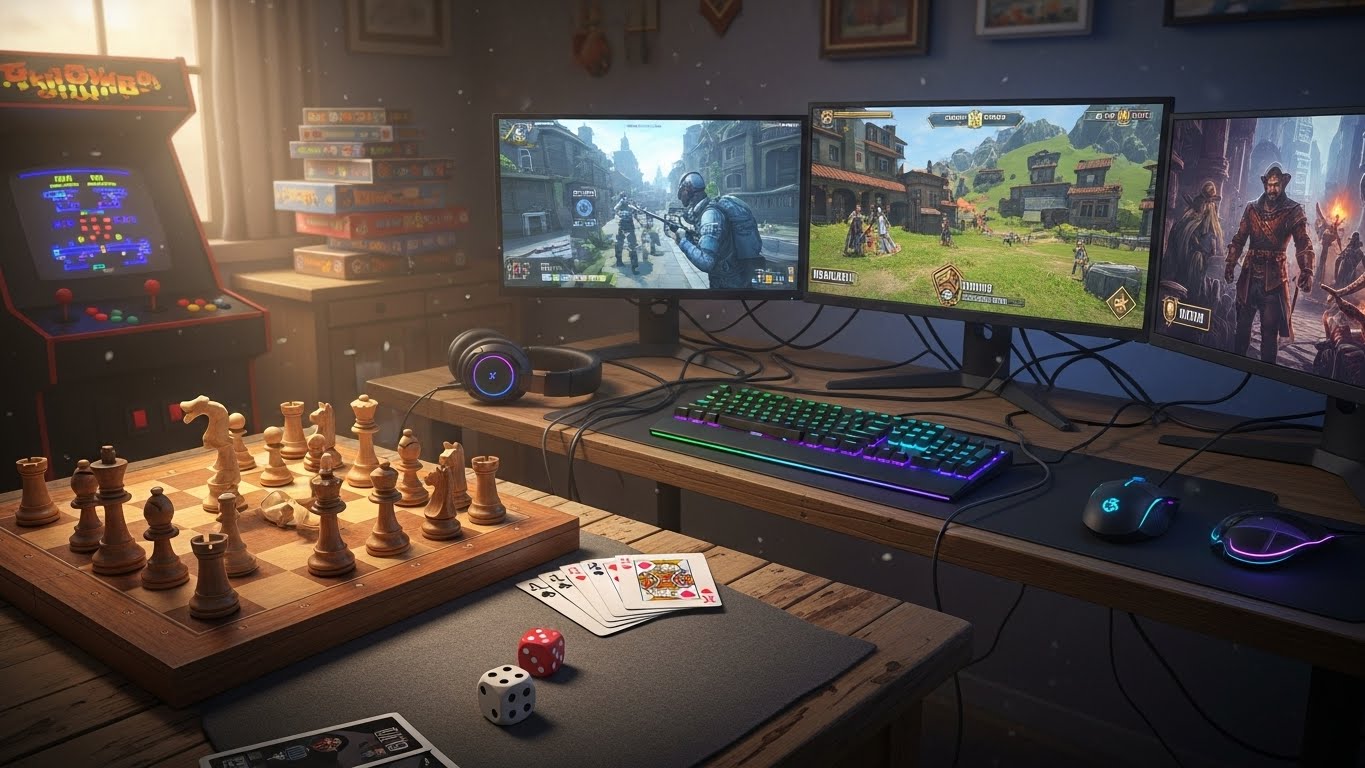
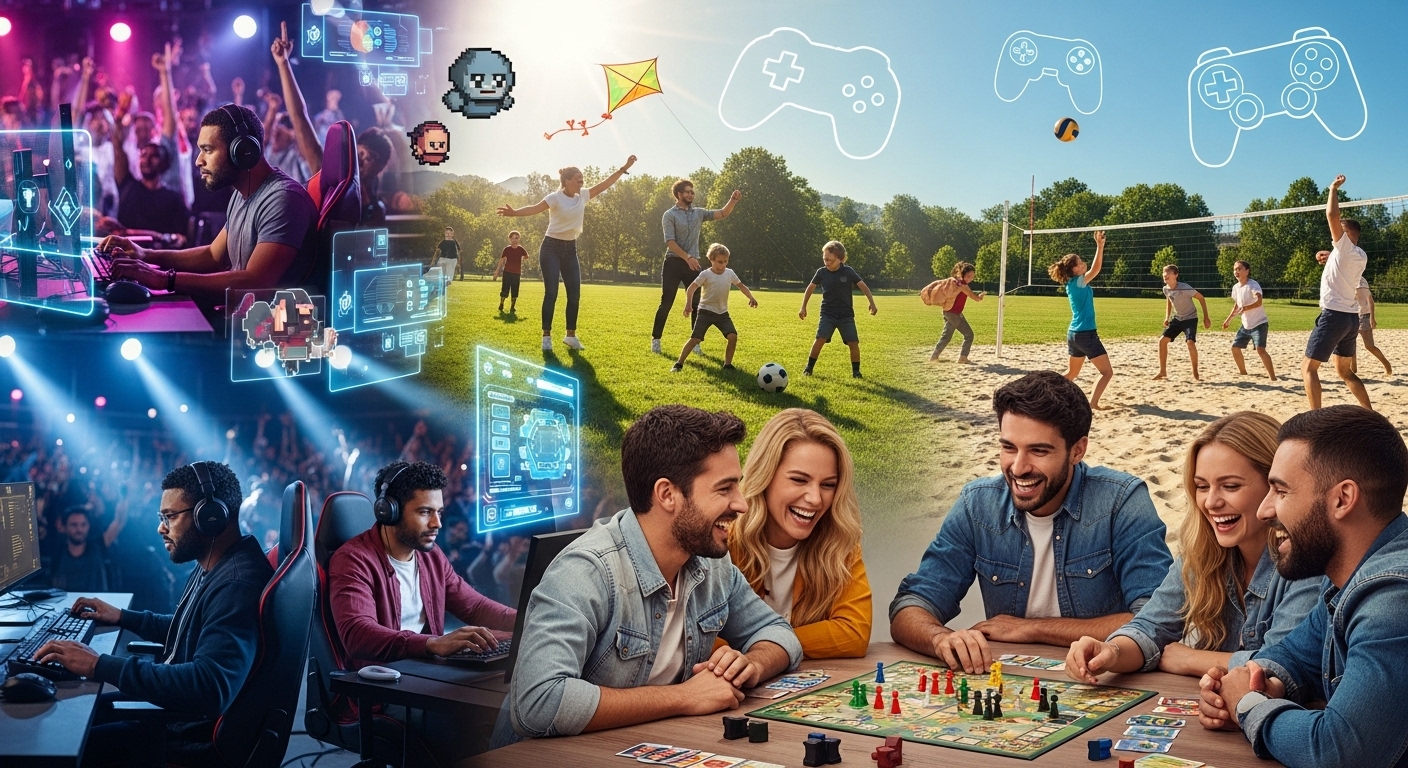
Games have always been more than just a form of entertainment. From the ancient board games played in temples and royal courts to the high-definition virtual worlds we explore today, games reflect human creativity, culture, and evolution. They entertain, challenge, teach, and even inspire innovation across industries. The modern world of gaming is not limited to children or hobbyists—it’s a vast ecosystem of technology, artistry, psychology, and global community. Whether it’s traditional sports, digital adventures, or virtual simulations, games continue to shape the way we think, learn, and interact.
The Ancient Roots of Gaming
The story of games begins thousands of years ago. Archaeological evidence shows that humans have been playing games since the earliest civilizations. Games like Senet in ancient Egypt, the Royal Game of Ur in Mesopotamia, and Mancala in Africa were not only recreational but also symbolic, often tied to religious beliefs or moral lessons. These early games served as a reflection of society’s values, strategies, and social interactions. They also helped individuals develop critical thinking and decision-making skills long before modern education systems existed.
As time progressed, new games evolved. Chess, for instance, emerged in India and spread globally as a game of intellect and strategy. It taught players foresight, patience, and logic—qualities that extended beyond the board. Similarly, card games became a popular pastime in medieval Europe, eventually inspiring the competitive and recreational culture that persists today.
The Rise of Digital Gaming
The 20th century marked a revolutionary shift from physical games to digital ones. The invention of computers and video technology gave birth to an entirely new realm of play. The first recognized video game, Pong, introduced in the early 1970s, was simple—a digital version of table tennis. Yet, it sparked a cultural movement that would eventually turn gaming into one of the world’s largest entertainment industries.
As technology advanced, games evolved from simple graphics to complex, story-driven experiences. The 1980s and 1990s saw the rise of consoles like the Nintendo Entertainment System and the PlayStation, introducing iconic titles such as Super Mario, The Legend of Zelda, and Final Fantasy. These games didn’t just offer fun—they introduced characters, worlds, and narratives that became part of global pop culture. The digital revolution allowed players to go beyond observation and become active participants in stories, shaping their own outcomes.
The Psychology of Play
One reason games have remained popular throughout history is their psychological impact. Humans are naturally drawn to challenges, competition, and rewards. Games tap into these instincts, providing a sense of achievement and satisfaction. They offer a safe environment for experimentation, risk-taking, and learning through failure—something real life doesn’t always allow.
In addition to entertainment, games promote cognitive skills such as problem-solving, spatial awareness, and strategic planning. Puzzle games enhance memory and attention, while action games improve reflexes and coordination. Even role-playing games foster empathy and creativity by allowing players to step into the shoes of different characters and explore diverse perspectives.
Moreover, the social aspect of gaming cannot be overlooked. Multiplayer games and online communities have transformed how people connect. Friendships, teamwork, and communication skills flourish in these digital spaces, breaking barriers of geography and language. For many, gaming provides not just amusement but belonging.
The Technological Evolution of Games
Technology continues to push gaming to new heights. Graphics engines now render breathtakingly realistic environments, while artificial intelligence creates responsive, lifelike characters. Virtual reality (VR) and augmented reality (AR) blur the line between digital and physical worlds, immersing players in experiences once thought impossible.
Cloud gaming and streaming platforms have made games more accessible than ever. Players no longer need expensive hardware; they can simply log in and play from any device. Meanwhile, the integration of blockchain technology is introducing ownership and economy into gaming, allowing players to trade or sell in-game assets securely.
The fusion of technology and creativity in modern gaming has also influenced other industries. Simulations and gamified systems are now used in education, healthcare, and business. For example, flight simulators train pilots, while interactive learning games engage students more effectively than traditional lessons.
The Rise of Mobile Gaming
In today’s fast-paced world, mobile gaming has emerged as one of the most dominant forms of entertainment. Smartphones have brought gaming into everyone’s pocket, allowing people to play anytime, anywhere. The accessibility of mobile games has opened the industry to all demographics, from children to adults, casual players to professionals.
Popular titles have transformed mobile gaming into a mainstream phenomenon, creating communities and even professional leagues. Mobile games are not only convenient but also innovative, often incorporating touch-based controls, real-time interaction, and location-based features. This portability and inclusiveness have made mobile gaming one of the fastest-growing sectors in entertainment.
Games as a Form of Art
Beyond mechanics and technology, games are a true artistic medium. They blend visual design, music, storytelling, and interactivity into one cohesive experience. Artists, writers, composers, and developers collaborate to create immersive worlds that evoke emotion and provoke thought. Games like Journey, The Last of Us, and Ori and the Blind Forest are often compared to cinematic masterpieces for their narrative depth and aesthetic beauty.
What makes games unique as an art form is their interactivity. Unlike films or books, players actively shape the outcome, making the experience personal and dynamic. Each decision can alter the story, giving players a sense of authorship within the art itself. This creative empowerment is one of the reasons gaming resonates so deeply with audiences today.
The Global Community of Gaming
The rise of online multiplayer games has turned gaming into a global social phenomenon. Players from different countries and cultures connect daily to compete, collaborate, and share experiences. Massive online games like role-playing adventures or competitive shooters unite millions in shared virtual spaces. This global interaction has turned gaming into a form of cultural exchange, fostering understanding and communication across borders.
Esports, the competitive side of gaming, has taken this social connection to a professional level. What began as friendly competition among friends has evolved into an organized global sport with tournaments, sponsors, and millions of spectators. Professional gamers now have fanbases as large as traditional athletes, and esports events fill entire arenas. This growth highlights how gaming has become a legitimate and respected field of entertainment and competition.
Educational and Therapeutic Benefits of Games
While often dismissed as mere pastime activities, games offer numerous educational and therapeutic benefits. In education, games provide interactive learning environments that make complex subjects more engaging. Strategy and simulation games enhance decision-making and analytical skills, while creative building games inspire innovation and problem-solving.
In therapy, games are being used to help individuals cope with stress, anxiety, and trauma. The immersive nature of gaming can provide a sense of control and escapism, offering mental relief in difficult times. Additionally, rehabilitation programs use motion-controlled games to assist physical recovery by combining exercise with fun and motivation.
Challenges and Controversies in Gaming
Despite its many advantages, the gaming industry faces challenges. Issues such as addiction, excessive screen time, and in-game spending habits have sparked debates among parents, educators, and policymakers. There are also concerns about violence in certain games and its potential influence on behavior, though studies continue to present mixed findings.
Furthermore, the industry must address inclusivity, representation, and online toxicity. Efforts are being made to create safer gaming environments and more diverse content that reflects a wider range of voices and cultures. As gaming grows in power and influence, maintaining ethical standards and responsibility becomes crucial.
The Future of Gaming
The future of gaming promises even greater possibilities. With advances in artificial intelligence, virtual worlds will become more adaptive and intelligent, offering truly personalized experiences. The integration of 5G and cloud computing will make seamless gaming a reality, removing barriers of hardware and location. Cross-platform play will further unify players, allowing anyone to connect regardless of device or system.
In the coming years, gaming will likely merge with other technologies like the metaverse, where users can work, socialize, and play in interconnected virtual spaces. The line between gaming, communication, and daily life will continue to blur, creating a new form of digital existence.
Conclusion
Games have journeyed from ancient board pieces to digital universes that define modern culture. They are not just sources of entertainment—they are tools for creativity, education, and connection. Through every generation, games have adapted to reflect humanity’s curiosity and desire for exploration. They inspire imagination, foster collaboration, and teach us about ourselves and the world around us.
As technology continues to evolve, games will remain at the heart of innovation, influencing art, science, and society. Whether played on a board, console, or phone, games remind us of one universal truth: play is not just an escape—it’s a reflection of what makes us human.