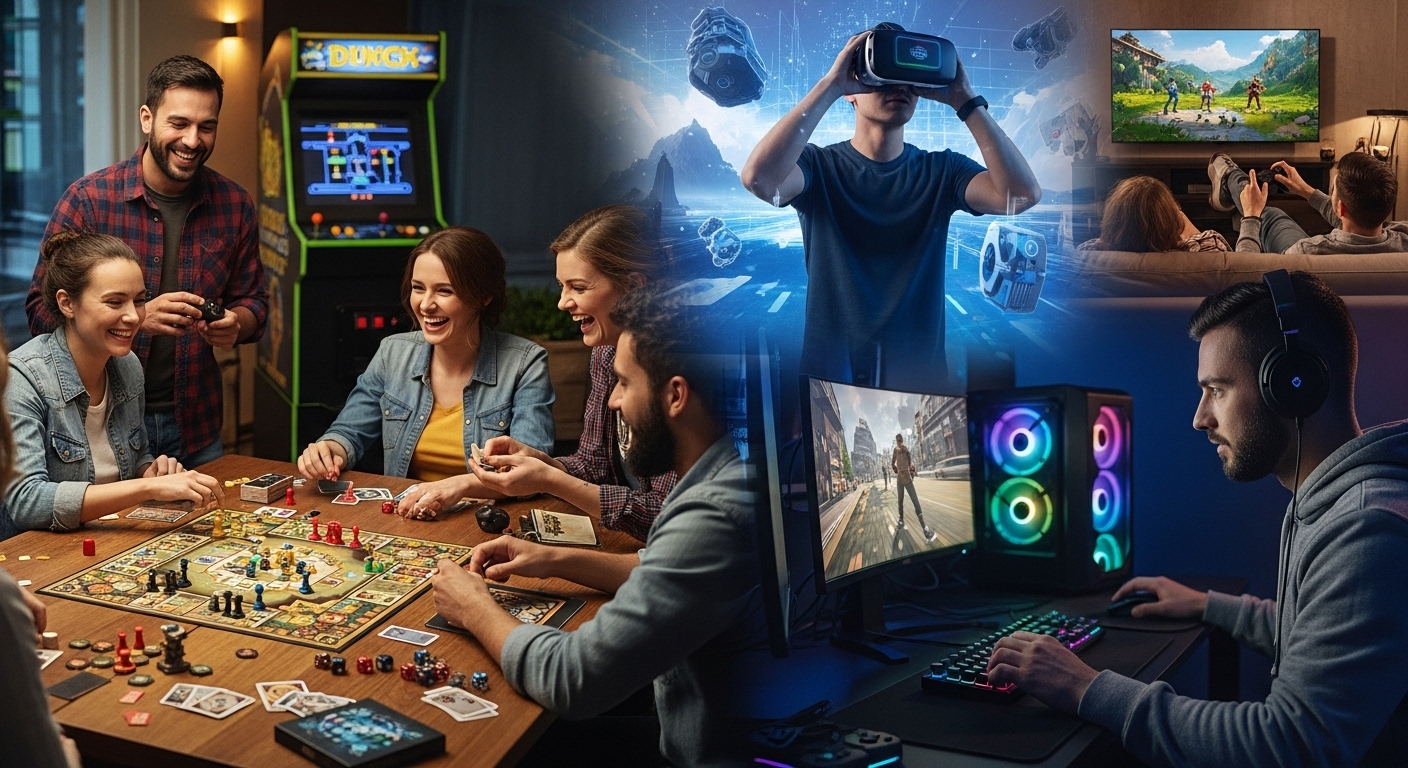
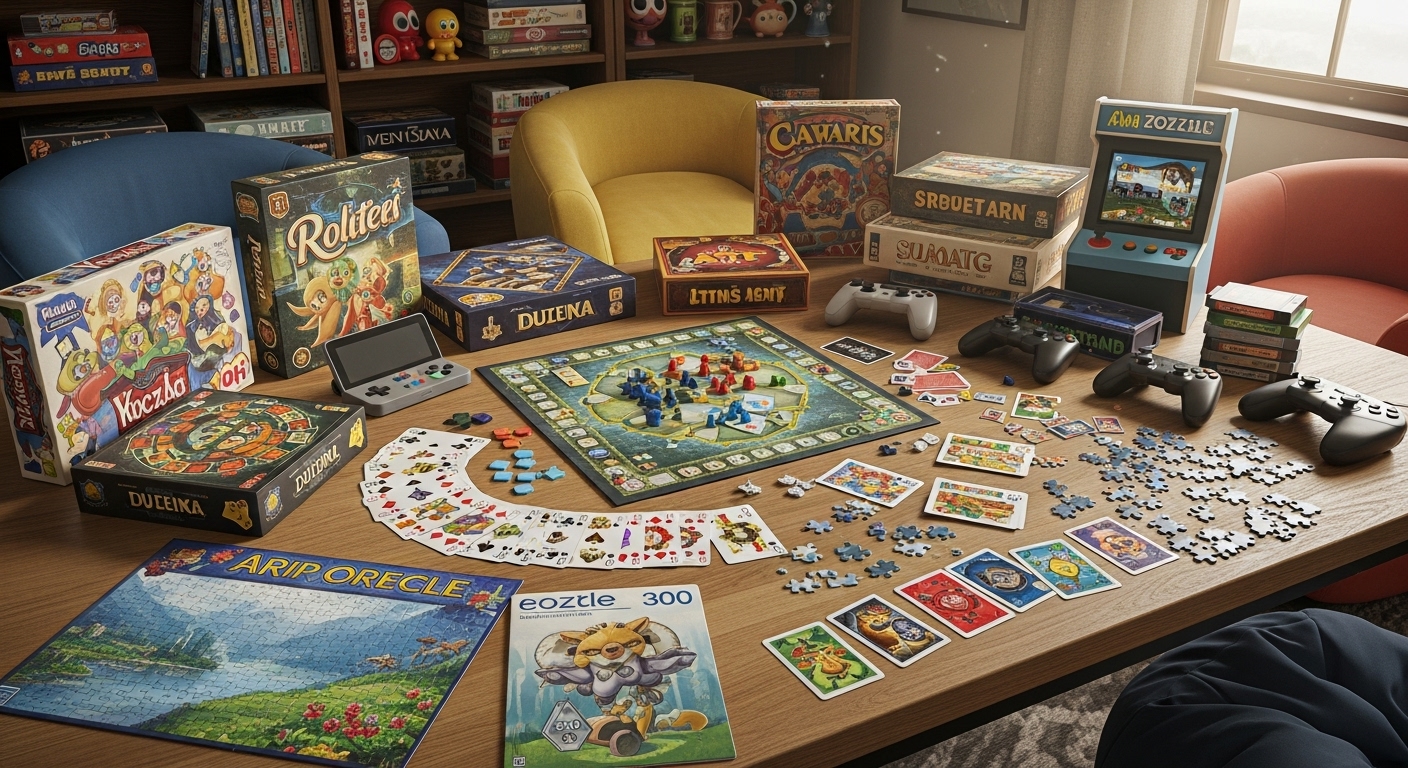
Games have been a part of human culture for centuries, whether played for entertainment, competition, or education. From ancient board games to modern video games, the world of gaming has always had a special place in our hearts. In this post, we’ll explore the evolution of games, their significance in our lives, and the future of gaming in the digital era.
The Origins of Games
Games are as old as civilization itself. The earliest known games date back thousands of years, with board games such as Senet in ancient Egypt and the Royal Game of Ur in Mesopotamia providing a window into the recreational activities of ancient societies. These early games often had more than just a playful purpose—they were tools for social interaction, strategic thinking, and sometimes even rituals.
As human societies evolved, so did their games. Chess, which originated in India around the 6th century AD, became a symbol of intellectual strategy and has endured for centuries as one of the most popular and respected games in the world. Similarly, card games were introduced in China during the Tang Dynasty and spread across Europe, where they became integral to social gatherings.
The Rise of Video Games
Fast forward to the 20th century, and a new era of games emerged—the video game. The 1950s and 1960s saw the first experiments with computer games, but it wasn’t until the early 1970s that arcade games like Pong began to capture the public’s imagination. The success of arcade games marked the beginning of the video game industry’s rapid expansion.
By the 1980s, video gaming had entered the mainstream with iconic titles like Pac-Man, Donkey Kong, and Space Invaders. These games weren’t just about pushing buttons—they were about immersive experiences that transported players to new worlds, whether they were navigating mazes, jumping over obstacles, or blasting aliens.
The 1990s brought even more groundbreaking advancements, such as the development of 3D graphics and the rise of home consoles. With systems like the Sony PlayStation and the Nintendo 64, video games became more accessible, offering a wider variety of genres and experiences.
The Evolution of Game Genres
As technology progressed, so did the range of genres in gaming. In the early days, the focus was on simple, accessible games that were easy to understand but difficult to master. Over time, however, developers began to experiment with more complex mechanics, narratives, and art styles, giving rise to a diverse array of genres that would shape the landscape of modern gaming.
- Action Games: These games are designed to challenge the player’s reflexes and reaction time. Classic examples include Super Mario Bros., Street Fighter, and the Halo series. Over time, action games have become more intricate, incorporating elements of exploration, puzzle-solving, and storytelling.
- Role-Playing Games (RPGs): RPGs let players step into the shoes of characters in a fictional world, often making choices that impact the outcome of the story. The Final Fantasy series, The Elder Scrolls V: Skyrim, and The Witcher games are celebrated for their expansive worlds and deep narrative elements.
- Strategy Games: These games require careful planning and decision-making, rewarding players for thoughtful approaches rather than quick reflexes. StarCraft, Civilization, and Age of Empires are prime examples of games that require players to manage resources, control units, and outsmart opponents.
- Sports Games: Whether it’s football, basketball, or racing, sports games simulate the excitement of live sporting events. Popular titles like FIFA, Madden NFL, and Gran Turismo have allowed players to engage in their favorite sports without leaving the comfort of their homes.
- Simulation Games: These games allow players to experience real-world activities, from managing a virtual city in SimCity to farming in Stardew Valley. They offer an escape into worlds where players can control and manipulate complex systems, often leading to satisfying, immersive gameplay.
- First-Person Shooters (FPS): FPS games put players in the shoes of a character from a first-person perspective, often involving combat and strategy. Titles like Call of Duty, Counter-Strike, and Overwatch have become staples of competitive gaming and esports.
- Adventure and Puzzle Games: Games that emphasize storytelling, exploration, and problem-solving fall into this category. The Legend of Zelda, Tetris, and Portal have become iconic examples of adventure and puzzle-solving gameplay.
The Role of Games in Modern Society
Games are no longer just about entertainment; they’ve become a powerful force in culture, education, and even therapy. The rise of gaming communities has fostered social interaction and a sense of belonging for millions of people around the world. Whether it’s through online multiplayer games or streaming platforms like Twitch, games provide a shared experience that brings people together.
In education, games are being used to teach everything from math and history to coding and languages. Gamification—the integration of game elements into non-game contexts—has become a popular strategy in classrooms, encouraging engagement through rewards, challenges, and interactive learning.
Moreover, games are being increasingly recognized for their therapeutic potential. Virtual reality (VR) is being used in physical therapy to help patients regain motor skills, while games designed for mental health, such as Sea of Solitude, address complex emotional issues in ways that traditional therapies cannot.
The Future of Gaming
The future of games is undoubtedly exciting, with technological advancements pushing the boundaries of what games can be. The next generation of consoles, virtual reality (VR), and augmented reality (AR) are all set to transform the way players experience games.
VR, in particular, has the potential to revolutionize gaming by offering fully immersive, 360-degree environments that players can interact with using motion controllers. Imagine exploring an alien planet or embarking on an underwater adventure from the comfort of your home. The possibilities are endless.
Meanwhile, AR is blending the real world with digital elements, as seen in the success of Pokémon Go, which brought players into the real world to catch virtual creatures. As AR technology advances, we may see more games that blur the line between reality and the virtual world.
Another area of growth is cloud gaming, which allows players to stream games directly to their devices without needing powerful hardware. This could democratize access to high-quality gaming, making it possible to play sophisticated games on smartphones and low-cost devices.
Conclusion
Games are an integral part of our lives, whether as a source of entertainment, social interaction, or personal growth. From ancient pastimes to modern digital masterpieces, the world of games has evolved in fascinating ways. As technology continues to advance, the possibilities for future gaming experiences are virtually limitless. Whether you’re a casual player or a dedicated gamer, the world of games offers something for everyone—and it’s only going to get more exciting from here.