
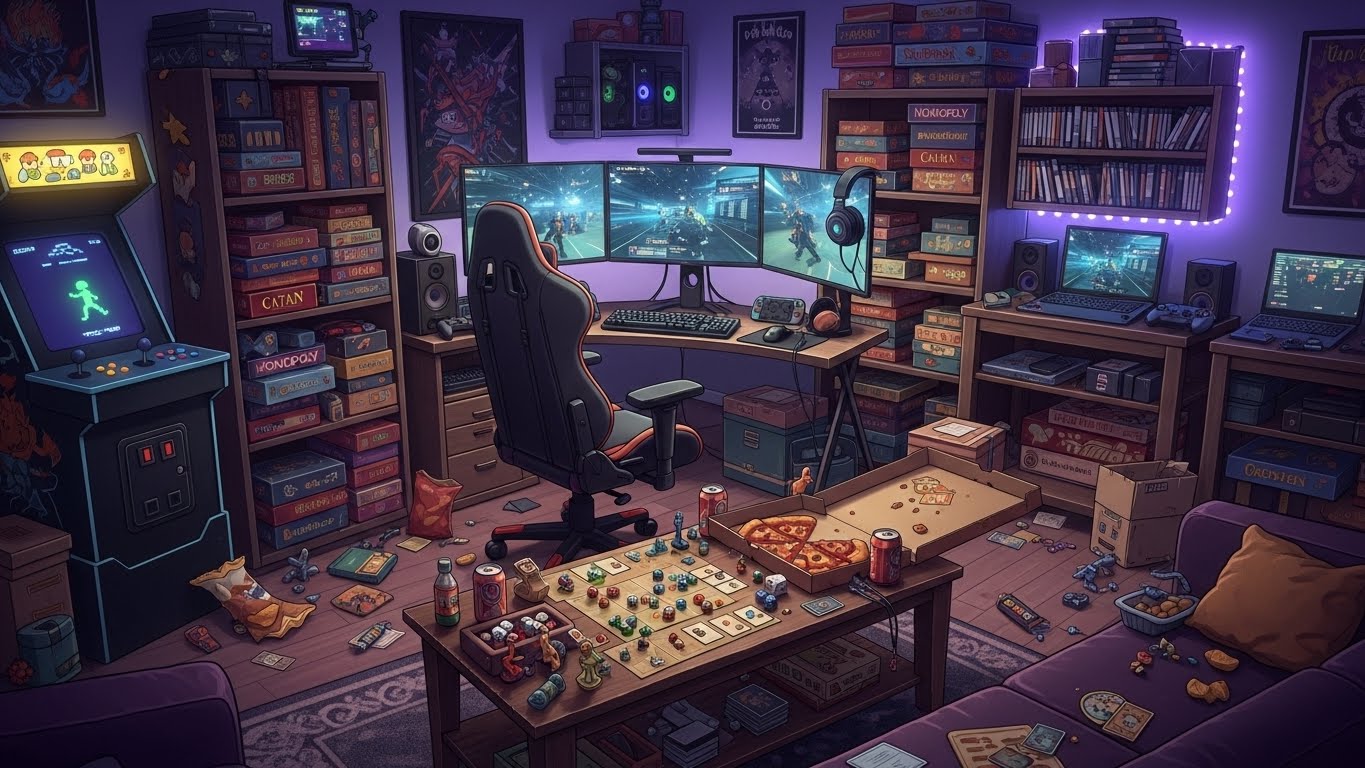
Video games have come a long way since their humble beginnings. From the early days of simple, pixelated graphics and basic gameplay mechanics, to the immersive, hyper-realistic virtual worlds we experience today, the gaming industry has seen tremendous growth and innovation. Whether you’re a casual gamer or a dedicated enthusiast, the evolution of video games is a fascinating journey that continues to shape how we interact with technology, storytelling, and entertainment. In this blog post, we will explore the history, impact, and future of video games, looking at key milestones, technological advancements, and the cultural significance of this global phenomenon.
The Humble Beginnings: The Birth of Video Games
The history of video games dates back to the late 1950s and early 1960s, when the first rudimentary games were developed on early computers. The idea of using computers for entertainment was still in its infancy, but game developers began experimenting with ways to engage users through interactive experiences.
One of the first known video games, Tennis for Two, was created in 1958 by physicist William Higinbotham. It was a simple tennis simulation displayed on an oscilloscope screen. However, it was not until 1972 that video games truly began to take form with the release of Pong by Atari. Pong was a simple arcade game that mimicked table tennis, where players controlled paddles and bounced a ball back and forth. This simple game marked the beginning of the video game industry and sparked a revolution in gaming.
The Golden Age of Arcades: 1970s to 1980s
The 1970s and 1980s were known as the “Golden Age” of arcade games. The arcade boom led to the creation of some of the most iconic games in history, including Space Invaders, Pac-Man, and Donkey Kong. These games were designed to be easy to learn but challenging to master, and they captured the attention of players worldwide.
The success of arcade games led to the development of home console systems that allowed people to enjoy video games in their own living rooms. The Atari 2600, released in 1977, became one of the first successful home consoles, allowing users to play games like Asteroids and Missile Command at home. The early home consoles were relatively simple compared to today’s systems, but they helped establish video gaming as a mainstream form of entertainment.
However, the video game industry faced a major crisis in the early 1980s. The market became oversaturated with poorly made games, and the gaming crash of 1983 nearly brought the industry to its knees. Many companies folded, and there was a general loss of faith in video games as a viable form of entertainment.
The Revival and Rise of Home Consoles: 1990s
The 1990s marked the revival of the video game industry, largely thanks to the success of home gaming consoles and the introduction of new, more powerful technology. Companies like Nintendo, Sony, and Sega began to dominate the gaming market, each pushing the envelope in terms of graphics, gameplay, and innovation.
The release of the Super Nintendo Entertainment System (SNES) in 1991 and the Sega Genesis in 1989 brought home consoles to the forefront. Games like Super Mario World, The Legend of Zelda: A Link to the Past, and Sonic the Hedgehog defined the era, offering deep, colorful, and challenging experiences for players.
In 1994, Sony introduced the PlayStation, a revolutionary console that would go on to change the landscape of gaming forever. The PlayStation’s 3D graphics and innovative game design led to iconic titles like Final Fantasy VII, Metal Gear Solid, and Gran Turismo. The PlayStation marked the beginning of the era of fully immersive 3D gaming, and it helped set the stage for the evolution of modern gaming experiences.
At the same time, personal computers became more powerful, giving rise to a new era of PC gaming. With the advent of more complex graphics cards, PCs were able to handle 3D graphics and realistic simulations. PC gaming titles like Doom, Warcraft, and Quake became hugely popular, showcasing the potential of gaming on a personal computer.
The New Millennium: The Rise of 3D Worlds and Online Gaming
As the 2000s approached, gaming technology began to advance rapidly. The introduction of the PlayStation 2 (PS2), Microsoft Xbox, and Nintendo GameCube in the early 2000s helped solidify video games as a global cultural force. These consoles featured better graphics, more immersive gameplay, and the introduction of online multiplayer gaming.
One of the most influential games of the 2000s was Halo on the Xbox. Halo became the gold standard for first-person shooters, offering both a compelling single-player campaign and a groundbreaking multiplayer experience. The success of Halo and other games like Grand Theft Auto III and The Elder Scrolls III: Morrowind showed the power of open-world exploration and the potential for vast, interconnected game worlds.
The PlayStation 2, which was released in 2000, became the best-selling video game console of all time, with a massive library of games like Grand Theft Auto: San Andreas, Final Fantasy X, and Kingdom Hearts. The PS2 was not only a gaming console but also a DVD player, which helped boost its popularity.
Online gaming became a significant part of the gaming experience in the early 2000s. Broadband internet became more widely available, and gaming consoles like the Xbox 360 and PlayStation 3 introduced online services such as Xbox Live and PlayStation Network. These services allowed players to compete against others around the world in multiplayer games like Call of Duty, World of Warcraft, and FIFA. The rise of online gaming changed the way people played games, creating communities and social experiences that extended beyond the game itself.
The Current Generation: HD Graphics and Virtual Reality
The latest generation of gaming consoles, including the PlayStation 5, Xbox Series X, and the Nintendo Switch, has taken gaming to new heights in terms of graphical fidelity, processing power, and immersive experiences. With 4K resolution, ray tracing, and ultra-fast load times, modern gaming consoles are able to render incredibly realistic graphics and deliver smooth, seamless experiences that rival the best in film and television.
The PlayStation 4 and Xbox One introduced gamers to a new level of realism with games like The Last of Us Part II, Red Dead Redemption 2, and Cyberpunk 2077. These titles featured sprawling open worlds, lifelike characters, and cinematic storytelling that brought gaming closer to the experience of interactive movies.
One of the most exciting innovations in gaming is the rise of virtual reality (VR). VR headsets, such as the Oculus Rift, HTC Vive, and PlayStation VR, allow players to fully immerse themselves in digital worlds, offering a level of interactivity and immersion that was previously unimaginable. VR games like Beat Saber, Half-Life: Alyx, and Resident Evil 7 showcase the potential of VR to transport players into new, fully realized worlds, where they can interact with their environment in real time.
Augmented reality (AR) gaming has also become more prevalent, particularly with mobile games like Pokémon Go. AR blends the real world with digital elements, allowing players to experience games that overlay digital creatures and objects onto their real-world surroundings.
The Cultural Impact of Video Games
The influence of video games extends far beyond the realm of entertainment. Video games have become a significant part of global culture, influencing art, music, fashion, and even social movements. The growth of esports, for example, has turned competitive gaming into a multi-million-dollar industry, with professional gamers and teams competing for prize money, sponsorships, and fame.
In addition, gaming has become a platform for storytelling, with developers creating emotionally resonant narratives that tackle complex themes such as love, loss, and identity. Games like The Last of Us, Journey, and Red Dead Redemption 2 have demonstrated that video games can be a powerful form of artistic expression, on par with film and literature.
Video games have also become a social activity, with millions of people around the world connecting with friends and strangers through online multiplayer games. Platforms like Twitch and YouTube allow gamers to share their experiences, build communities, and create content for audiences. Streaming, gaming content creation, and esports events have created a new form of entertainment that rivals traditional television and sports.
The Future of Gaming: What Lies Ahead?
The future of gaming is full of possibilities. As technology continues to improve, we can expect even more realistic graphics, deeper storytelling, and innovative gameplay experiences. Artificial intelligence (AI) will play an increasingly important role in creating dynamic, responsive game worlds, while cloud gaming services like Google Stadia and Xbox Cloud Gaming will make it easier to play high-quality games without the need for expensive hardware.
Virtual reality and augmented reality will continue to evolve, offering even more immersive and interactive experiences. As game developers experiment with new technologies, the boundaries between the real world and digital worlds will continue to blur, creating new ways for players to engage with games.
The rise of mobile gaming will also continue, with smartphones and tablets becoming even more powerful, allowing players to enjoy high-quality gaming experiences on the go. Mobile games like Fortnite and Clash Royale have already proven that gaming can be enjoyed on any device, and this trend is likely to expand as technology improves.
Conclusion: Gaming’s Everlasting Impact
Video games have come a long way from their early days as simple arcade machines, and the industry continues to evolve in exciting and innovative ways. With advanced technology, breathtaking graphics, and immersive storytelling, video games have become a central part of global culture.