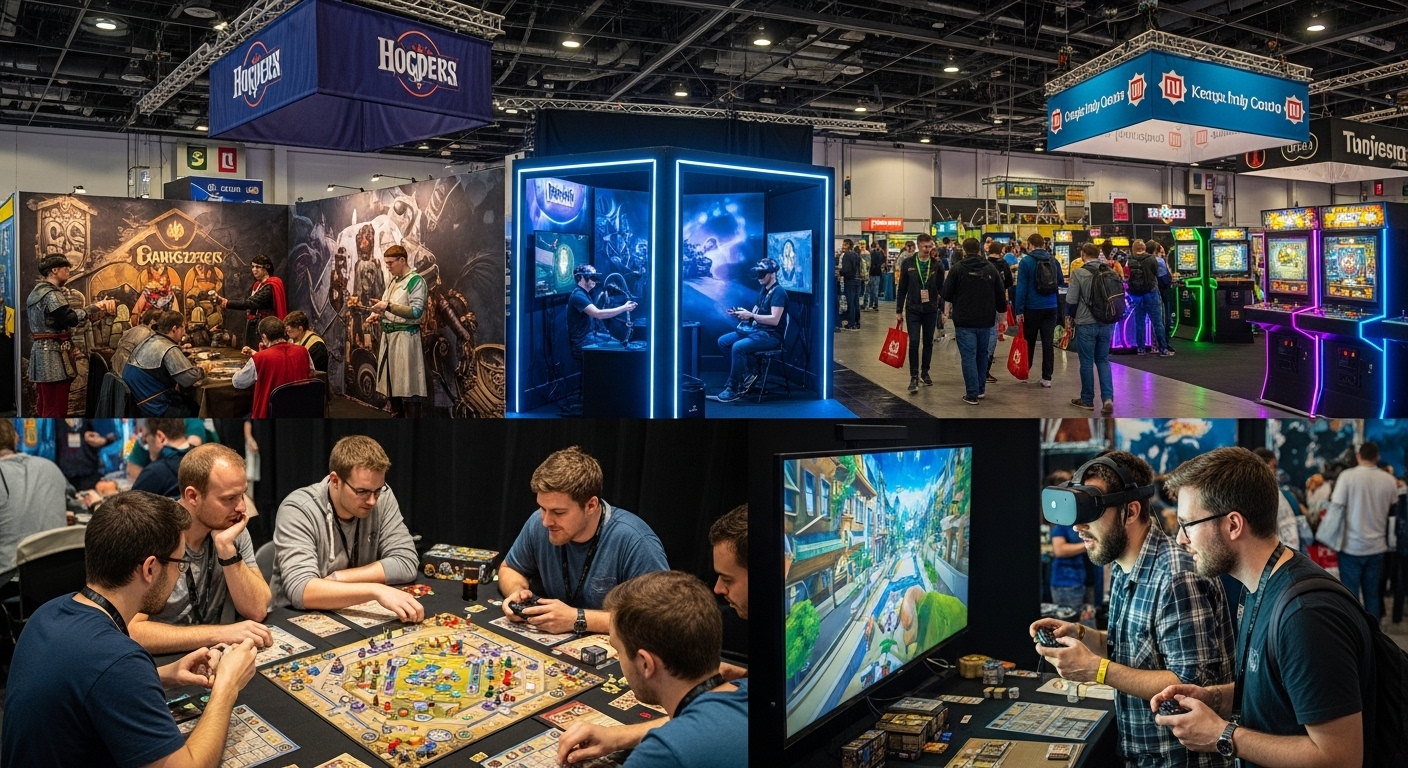

Gaming has become more than just a pastime. It is a cultural phenomenon that spans generations, engages millions of people worldwide, and has evolved from simple pixelated screens to immersive, interactive worlds. From the days of coin-operated arcade games to the rise of virtual reality (VR), gaming has gone through numerous transformations, both technologically and socially. As the gaming industry continues to expand, it is worth looking at how games have evolved over the years, the current trends shaping the future of gaming, and what we can expect from this ever-changing medium in the years to come.
In this blog post, we will explore the history of video games, key developments in gaming technology, the role of storytelling, the social aspects of gaming, and the exciting innovations that are shaping the future of interactive entertainment.
The Birth of Video Games: A New Form of Entertainment
Video gaming began in the early 1950s and 1960s, when scientists and engineers began experimenting with computer graphics and interactive simulations. These early games were simple, often consisting of basic shapes and lines, but they laid the groundwork for what would become a booming global industry.
One of the first major milestones in video game history was the release of Pong in 1972. Developed by Atari, Pong was a simple two-dimensional tennis game where players controlled paddles and bounced a ball back and forth. Despite its simplicity, Pong was an instant success, attracting large crowds to arcades and giving rise to the video game industry.
This was the era of arcade gaming, where games were often simple but addictive, designed to be played in short bursts. Some iconic games of this era include Space Invaders, Pac-Man, Asteroids, and Donkey Kong. These early games created a cultural shift, capturing the attention of millions and giving rise to the first generation of gamers.
The Rise of Home Consoles: Gaming Becomes Personal
In the late 1970s and early 1980s, home gaming consoles began to emerge. The introduction of the Atari 2600 in 1977 marked a pivotal moment in gaming history. This console allowed players to bring the arcade experience into their homes, playing a variety of games on their televisions. The concept of home gaming quickly took off, leading to the development of other early consoles such as the Nintendo Entertainment System (NES) and the Sega Master System.
The home console era brought a new level of sophistication to gaming. Games became more complex, with better graphics, sound, and storylines. Classic titles such as Super Mario Bros., The Legend of Zelda, and Metroid helped establish the foundation for modern gaming, with platformers, action-adventure games, and role-playing games (RPGs) becoming popular genres.
The 16-bit era, marked by consoles like the Sega Genesis and the Super Nintendo Entertainment System (SNES), pushed the boundaries of gaming even further. Graphics and sound improved, and the industry began to embrace more varied genres, from fighting games like Street Fighter II to side-scrolling shooters like Contra. This was the golden age of console gaming, a period of rapid technological innovation that laid the groundwork for the massive gaming industry we know today.
The Birth of 3D Gaming and the PlayStation Revolution
The 1990s marked another major milestone in the evolution of gaming: the shift from 2D to 3D graphics. This transition was led by consoles like the Sony PlayStation, which was released in 1994. With the PlayStation, games like Gran Turismo, Final Fantasy VII, and Metal Gear Solid pushed the boundaries of what was possible in terms of both gameplay and graphics. The PlayStation became a major player in the gaming industry, and Sony’s success helped solidify the gaming console as an essential part of home entertainment.
Alongside the PlayStation, the Nintendo 64 and Sega Saturn also contributed to the rise of 3D gaming, though the PlayStation ultimately emerged as the dominant force. 3D graphics opened up entirely new possibilities for game design, allowing for expansive, open worlds and dynamic gameplay experiences. Games like Super Mario 64 and The Legend of Zelda: Ocarina of Time are still considered some of the greatest titles in gaming history, thanks to their innovative use of 3D environments and immersive storytelling.
The 1990s also saw the rise of personal computers as a gaming platform. With the introduction of powerful PCs and operating systems like Windows 95, PC gaming took off with titles like Warcraft, Doom, and Quake. These games set the stage for the rise of multiplayer online gaming and the esports industry.
Online Gaming and the Era of Multiplayer
The next major leap in gaming came with the rise of online multiplayer games. In the late 1990s and early 2000s, broadband internet became widely available, and developers began to explore the possibilities of online connectivity. Games like StarCraft, Quake III Arena, and Counter-Strike allowed players to connect over the internet and compete against each other in real-time.
This period also saw the emergence of massively multiplayer online role-playing games (MMORPGs) like World of Warcraft, which brought tens of millions of players together in a shared virtual world. World of Warcraft became a cultural phenomenon, offering players a vast, immersive environment where they could socialize, explore, and engage in epic quests and battles.
The growth of online gaming also brought about the rise of competitive gaming, or esports. Games like League of Legends, Dota 2, and Overwatch have become global esports franchises, with professional leagues, sponsorships, and millions of dollars in prize money. Esports has transformed gaming from a casual hobby into a legitimate sport, with millions of viewers tuning in to watch live tournaments and events.
The Mobile Gaming Revolution: Gaming in Your Pocket
With the advent of smartphones, gaming entered a new phase. Mobile gaming has become one of the most popular and accessible forms of entertainment, with games like Angry Birds, Candy Crush Saga, and Clash of Clans attracting millions of players worldwide. Smartphones made gaming accessible to people who may not have been interested in traditional consoles or PC gaming, and the rise of mobile gaming has created a new market for casual gamers.
Mobile gaming is characterized by its simplicity and accessibility, with many games designed for short, quick play sessions. However, as mobile technology has advanced, mobile games have become more complex and sophisticated. Games like Pokémon GO, Fortnite, and PUBG Mobile have pushed the limits of mobile gaming, offering rich graphics, multiplayer capabilities, and in-game events that keep players engaged for hours.
The rise of mobile gaming has also led to the development of new business models, such as free-to-play games with in-app purchases. This has become the dominant model for many mobile games, allowing players to download and play for free while offering optional purchases to enhance their experience.
Virtual Reality and Augmented Reality: A Glimpse into the Future
As technology continues to advance, gaming is on the cusp of another transformation. Virtual reality (VR) and augmented reality (AR) are set to revolutionize the gaming experience by providing fully immersive environments that allow players to interact with the game world in a more natural and intuitive way.
VR gaming, made possible by headsets like the Oculus Rift, HTC Vive, and PlayStation VR, places players inside a fully immersive 3D environment. Players can move around, interact with objects, and experience games as if they were truly a part of the world. VR has the potential to create entirely new types of games, from first-person shooters to interactive storytelling experiences, where the player’s physical movements and actions are integrated into the gameplay.
Augmented reality, on the other hand, overlays digital elements onto the real world. Games like Pokémon GO have demonstrated the power of AR to blend the virtual and physical worlds. Future AR games could involve scavenger hunts, interactive puzzles, and location-based challenges that integrate seamlessly into our everyday surroundings.
Both VR and AR are still in the early stages, but they have already shown incredible promise. As these technologies continue to improve, the future of gaming will likely be defined by increasingly immersive and interactive experiences.
The Role of Storytelling in Modern Games
One of the most significant aspects of modern gaming is the role of storytelling. Video games have evolved from simple, arcade-style experiences to rich, narrative-driven journeys that can rival the best movies and novels. Storytelling in games has become more complex, with players taking on the role of protagonists and making decisions that affect the outcome of the narrative.
Games like The Last of Us, Red Dead Redemption 2, and God of War have pushed the boundaries of what is possible in terms of narrative, blending cinematic storytelling with interactive gameplay. These games explore complex themes, emotional character arcs, and immersive worlds that engage players on a deep level. The ability to make choices and shape the outcome of a game has given players a sense of agency and investment in the story.
The integration of voice acting, motion capture, and advanced animation techniques has further enhanced the storytelling aspect of games, making characters more lifelike and relatable. With the rise of open-world games, players can explore vast virtual environments and immerse themselves in detailed narratives that unfold organically.
The Future of Gaming: Innovation on the Horizon
The gaming industry is constantly evolving, and the future holds exciting possibilities. Cloud gaming, which allows players to stream games from powerful servers rather than relying on local hardware, could make high-quality gaming more accessible to people with lower-end devices. Additionally, the continued development of artificial intelligence (AI) and machine learning could lead to more dynamic, adaptive game worlds that respond to player choices in real-time.