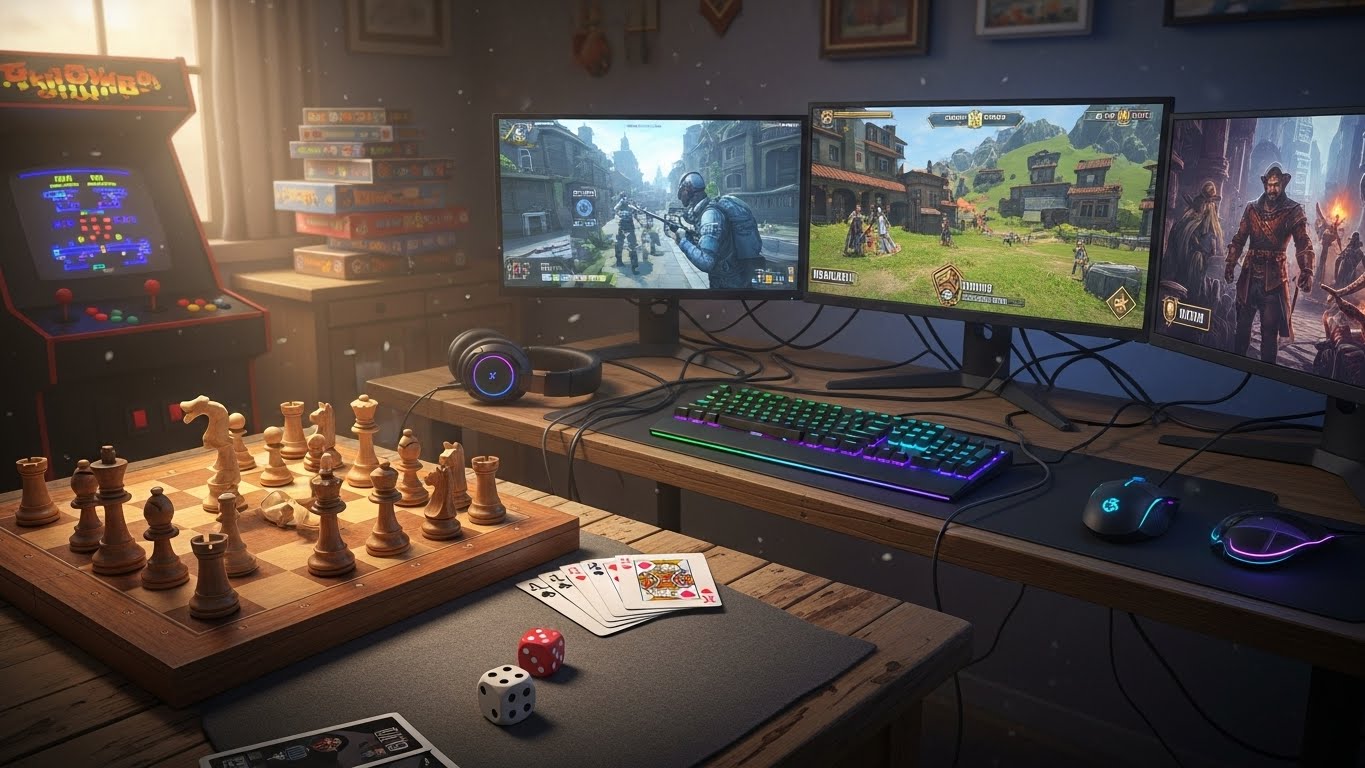

In the world of video games, there’s an ever-growing sea of titles, some of which follow familiar trends, formulas, and mechanics. But in the midst of this, there exists a special category of games that defy expectations, offering something completely different from the mainstream. These games break boundaries, challenge norms, and offer players an experience that is fresh, innovative, and often unexpected. These unique games stand out not only because of their gameplay but also due to their ability to reinvent the very idea of what a video game can be. In this blog post, we’ll explore some of the most unique video games and examine what makes them so special.
The Magic of Indie Games
When discussing unique video games, it’s impossible not to mention the impact of indie developers. Indie games are typically made by smaller development teams, often with a vision that isn’t constrained by the financial pressures of large game studios. This freedom allows for greater creativity and risk-taking, which often results in games that are distinct from anything produced by mainstream developers.
The indie game scene has produced a number of titles that have completely redefined the gaming landscape. Games like Hollow Knight, Celeste, and Undertale have received critical acclaim for their innovation, art direction, and emotional depth. These games challenge players with new mechanics, storytelling techniques, and visuals that are far from what you’d expect from big-budget titles. They prove that smaller teams, armed with passion and creativity, can create experiences that are just as impactful as the AAA games.
Hollow Knight is a prime example of this. This action-platformer, with its beautiful hand-drawn world and challenging gameplay, immerses players in a vast underground kingdom. The game offers intricate exploration, tough enemies, and a hauntingly beautiful soundtrack, making it a standout in the Metroidvania genre. Despite its difficulty, Hollow Knight’s charm lies in its atmosphere and the freedom it offers players to explore its mysterious world at their own pace.
Similarly, Undertale revolutionized the way we think about narrative in video games. This quirky RPG allows players to choose whether to fight or befriend enemies, with their decisions impacting the outcome of the story in profound ways. Its unique combat system, where players can dodge attacks and negotiate with foes, is a refreshing departure from the traditional turn-based battles found in most RPGs. The game’s humor, emotional depth, and multiple endings make it a truly unforgettable experience.
Breaking Conventions with Unconventional Gameplay
A key factor that sets many unique games apart is their willingness to break conventional gameplay norms. Traditional games often follow set rules: you level up characters, defeat enemies, and progress through linear stages. However, the games we consider truly unique subvert these expectations, offering gameplay that challenges our preconceived notions of what a game should be.
The Stanley Parable is a brilliant example of this. At first glance, it might seem like a standard walking simulator, but it quickly becomes apparent that the game is anything but conventional. Players control Stanley, an office worker who discovers that his entire world is being narrated to him by an unseen voice. The game presents players with choices—whether to follow the narrator’s instructions or to ignore them entirely, leading to a variety of outcomes. It’s a game that plays with the very concept of choice and control in video games, forcing players to question the nature of free will in a medium that typically offers structured paths.
Another game that redefines gameplay conventions is Katamari Damacy. In this delightfully bizarre game, players control a sticky ball known as a katamari, which rolls around collecting objects in the environment. As the katamari grows, it can pick up larger and larger items, creating a snowball effect. The game’s whimsical premise, combined with its quirky soundtrack and bright, colorful visuals, creates an experience that’s as fun as it is absurd. It’s a simple mechanic that becomes increasingly addictive, offering hours of playful exploration and unexpected surprises.
Artistic Expression in Unique Games
One of the most significant characteristics of unique video games is their artistic vision. These games often stand out not only because of their gameplay but also due to the creativity of their visual design. Whether it’s a stunning hand-drawn world, a pixelated landscape, or a minimalistic approach to art direction, the art in these games often plays a central role in the overall experience.
Journey is one of the most visually striking games of the past decade. In this minimalist adventure, players control a robed traveler journeying across a vast desert toward a distant mountain. The game’s art direction is simple yet breathtaking, with sweeping sand dunes, ancient ruins, and a warm color palette that conveys both the beauty and the desolation of the desert. The lack of dialogue allows the world itself to tell the story, and the game’s emotional depth is enhanced by the music, which swells as players progress through the desert. Journey proves that sometimes less is more, and the absence of unnecessary complexity allows the player to fully immerse themselves in the game’s artistic and emotional experience.
Another example of exceptional artistic expression is Inside, the spiritual successor to Limbo. Like its predecessor, Inside is a dark, side-scrolling puzzle platformer, but its visual style and atmosphere are even more haunting. The world of Inside is oppressive and unsettling, with cold, industrial environments that feel alien and dangerous. The game’s art is sparse, focusing on silhouettes, shadows, and muted colors to create a sense of unease. Combined with its eerie soundtrack, Inside draws players into a world that’s both captivating and chilling.
Narrative Innovation in Unique Games
While traditional video games often rely on linear storytelling, many unique games take a different approach to narrative, offering players more freedom to explore and interact with the world in their own way. These games invite players to become active participants in the story, allowing them to shape the narrative based on their actions and choices.
The Witness, for example, is a first-person puzzle game that offers a unique form of storytelling. Set on an island filled with puzzles, players must solve various environmental challenges to unlock more areas and uncover pieces of a larger narrative. The game doesn’t rely on traditional dialogue or cutscenes but instead uses the puzzles and the environment to gradually reveal the story. This unconventional approach to narrative allows players to piece together the mystery of the island at their own pace, making the experience feel both personal and immersive.
In contrast, Braid takes a more abstract approach to storytelling, using time manipulation mechanics to tell a story of love and regret. The game’s puzzles involve rewinding time to solve challenges, which also mirrors the emotional themes of the narrative. As players progress, they uncover pieces of the story that are open to interpretation, creating an experience that feels like a work of art rather than a traditional game. The innovative gameplay mechanics and thought-provoking narrative make Braid one of the most unique and memorable experiences in gaming.
The Impact of Unique Games on the Industry
The influence of unique games goes far beyond their initial release. Many of these titles have inspired a new generation of developers to take creative risks and push the boundaries of game design. They have demonstrated that innovation, rather than adhering to formulas, can lead to success and critical acclaim.
Games like Hollow Knight, Undertale, and Celeste have proven that even small indie titles can make a massive impact on the industry. They show that players are eager for fresh experiences, and they have opened the door for even more experimental games in the future. These games not only provide players with exciting new worlds to explore but also push the entire industry forward by encouraging developers to think outside the box.
Conclusion
Unique video games are more than just titles that stand out from the crowd—they represent the cutting edge of creativity in the gaming industry. Whether through unconventional gameplay, innovative narratives, or stunning art, these games offer something different for players seeking new experiences. They challenge us to rethink what games can be, and in doing so, they continue to shape the future of the medium.
In a world where the gaming landscape can sometimes feel saturated with familiar titles, these unique games provide a welcome reminder of the endless possibilities within the world of video games. They offer a chance to explore new ideas, new worlds, and new ways of experiencing interactive storytelling. As the gaming industry continues to evolve, there’s no doubt that the most unique games will continue to inspire and redefine the medium for years to come.